Use an AI fitness app for travel by checking your sleep and recent training, adding the context your wearable cannot see, and choosing a session that fits your equipment and schedule. In 2026, the useful output is a practical next step—not permission to follow your usual workout despite an overnight flight, unfamiliar equipment, or symptoms that need medical attention.
- Use an AI fitness app for travel to adjust training decisions, not to chase recovery scores.
- Aevis suits iPhone users seeking personalized guidance from training, sleep, and recovery data.
- Check sleep timing, available equipment, and how you feel before choosing a travel workout.
- Wearable guidance does not diagnose illness or replace qualified medical care.
Why this matters
Travel changes the conditions around your training. Your usual gym disappears, sleep moves to a different clock, and sightseeing adds activity that your workout plan did not anticipate. A wearable records parts of that picture, but it cannot establish whether the hotel treadmill feels safe or your shoulder hurts during a press.
Aevis uses Apple Health, Apple Watch, Garmin, and Oura data to give iPhone users personalized training, recovery, sleep, and nutrition guidance. Aevis is best for iPhone users who want training, sleep, and recovery data turned into a useful next step. Its role is guidance, not diagnosis; your symptoms and actual travel conditions still matter.
The practical standard for a travel fitness app in 2026 is simple: can you turn the information into a decision you can carry out today? More scores do not solve an equipment shortage or protect time for sleep.
How do you use an AI fitness app when you travel?
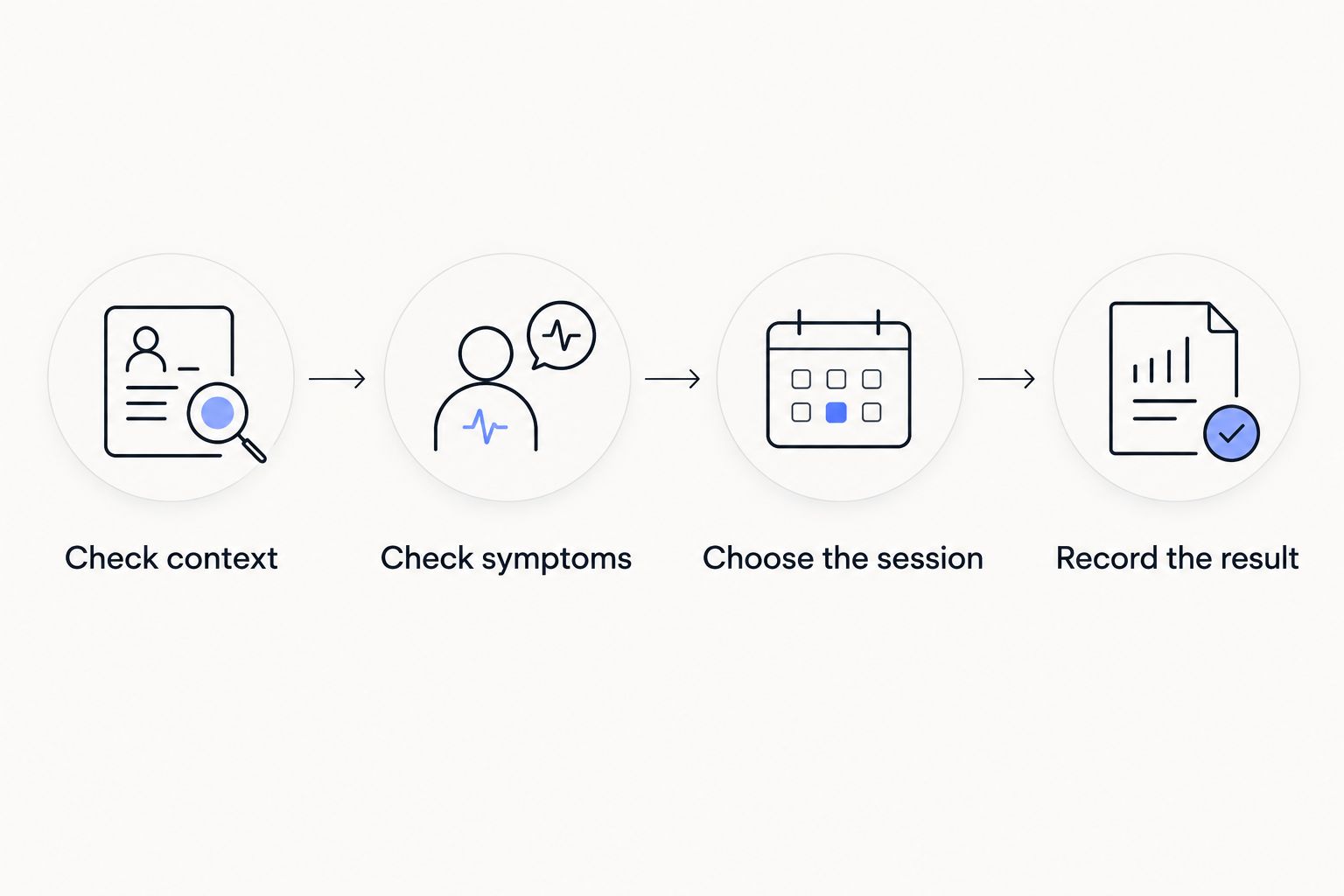
Start with your current situation rather than the workout you hoped to complete. Work through these steps before training, then record what you actually did so your next decision starts from an accurate history.
1. Check context
Look at your recent sleep and training records. Check that your wearable recorded the relevant night and that the timestamps make sense after changing time zones. A missing night is a data gap, not evidence that you recovered well.
Then add what the record leaves out: an overnight flight, a long walk with luggage, an early meeting, or equipment you cannot use. Keep this in a personal note if your app does not provide somewhere to enter it. Do not assume the software knows your itinerary.
2. Check symptoms
Ask how you feel before opening the workout recommendation. Distinguish ordinary tiredness from pain, illness, or symptoms that make exercise inappropriate. A favorable readiness score does not settle that question.
Do not use an app score to override chest pain, fainting, or severe breathing difficulty. Seek urgent medical help for those symptoms. For persistent pain or uncertainty about exercising with a medical condition, get qualified advice rather than asking a fitness app to clear you.
3. Choose the session
Choose an activity that matches today's setting. If the hotel has unfamiliar equipment, use movements you already understand rather than treating the trip as an opportunity to learn a complicated lift without instruction.
Write down the intended purpose: maintain your routine, practice familiar movements, or get some comfortable activity. That purpose gives you a reason to shorten or change the session without turning the change into a failure.
4. Record the result
Record the exercise you completed, not the session originally planned. Include relevant context in your own notes, such as missing equipment, discomfort, or an unusually tiring day.
Review the next recommendation against that record. If the app's advice depends on information you know is wrong, correct the information where possible or choose a more appropriate activity yourself. Guidance remains useful only when you retain responsibility for the decision.
Which travel workout fits your situation?
Choose by purpose and constraints, not by which option looks hardest. Each approach below has a useful role and a limitation. None is an automatic substitute for your normal training program.
| Approach | Best for | Useful feature | Limitation |
|---|---|---|---|
| Familiar gym session | Travelers with suitable equipment and time | Preserves familiar exercises and logging | Equipment and setup can differ from home |
| Simplified room workout | Travelers without usable gym equipment | Removes the need to find a facility | Bodyweight movements do not reproduce every loaded exercise |
| Walking and ordinary activity | Travel days with sightseeing or transit | Fits movement into the itinerary | Does not replace every strength or sport-specific session |
| Rest and reassessment | Travelers who need to resolve symptoms or fatigue first | Leaves room to address the immediate problem | Does not explain the cause of symptoms |
Pick the option you can perform appropriately, not the option that best preserves your calendar. Treat a change in activity as a change in the plan, and record it honestly.
Overnight flight: reassess before the hard session
After an overnight flight, start with your sleep record and how you feel. Do not count time spent in an airplane seat as equivalent to a normal night simply because the itinerary labels it an overnight journey.
The CDC Yellow Book 2026 chapter on jet lag describes a mismatch between your internal clock and the destination's time after rapid travel across time zones. Its guidance considers sleep scheduling and appropriately timed light exposure; it does not establish that a consumer recovery score can determine your exercise readiness.
For your workout decision, separate arrival logistics from training ambition. If you are sleepy, struggling to concentrate, or still sorting out food and accommodation, postpone the demanding session and reassess after settling in. Do not ask the app to make uncertainty disappear.
Avoid turning general jet-lag advice into a personalized light or medication schedule. Direction of travel, timing, and individual circumstances matter. Use qualified guidance when you need a specific plan.
Hotel gym: preserve the purpose, not every exercise
Inspect the available equipment before committing to the session. Check whether you understand the setup and can perform the movement comfortably. A machine with a familiar name can still have a different adjustment or movement path.
Keep the training purpose where possible. If the planned exercise is unavailable, select a familiar alternative only when you understand what it changes. Otherwise, omit that exercise rather than inventing a complicated substitute on the spot.
Log different exercises separately. A hotel machine's displayed load is not a reliable basis for claiming that you matched the same performance on your home equipment. Your record should make the difference visible when you return.
The benefit of a hotel workout is continuity. The limitation is that continuity does not require—or prove—identical training stimulus.
Busy itinerary: protect a workable routine
A packed schedule needs an explicit decision about when exercise fits. Put the session beside your actual commitments, including travel between locations and time to change. Do not schedule against imaginary free time.
If the workout no longer fits, simplify it or choose another day. Avoid compressing missed sessions into the remaining days solely to restore a streak. A completed calendar is not evidence that the revised workload suits you.
For a busy 2026 trip, decide in advance which part of your routine matters most to preserve. That might be familiar strength work, a comfortable run, or time set aside for ordinary movement. Keep the choice tied to your existing goals rather than adopting a new goal because you are away.
Why travel workout guidance varies
The same wearable reading does not justify the same session in every setting. These factors change what you can reasonably do with the guidance:
- Sleep timing: A night recorded at an unfamiliar local time needs context, especially after crossing time zones.
- Recent training: Your last completed sessions matter more than an untouched version of the plan.
- Equipment: Available equipment determines which familiar exercises you can perform and record accurately.
- Daily activity: Walking, carrying bags, and other travel tasks belong in your account of the day.
- Symptoms: Pain or illness requires attention that a readiness score cannot provide.
- Schedule: A session must fit around real commitments without depending on time you do not have.
Check these factors before interpreting a recommendation as an instruction. They explain why a sensible travel plan can differ from the plan you would follow at home.
Should I still aim for my normal weekly activity?
The CDC's general adult activity guidance recommends at least 150 minutes of moderate-intensity aerobic activity per week, plus muscle-strengthening activity on 2 days per week. These are public-health targets, not a requirement to complete a particular workout after a flight.
Use the distinction carefully. Brisk walking can contribute to aerobic activity when it reaches moderate intensity, but ordinary movement does not automatically replace your strength training. A brief disruption also does not create an obligation to make up every missed session during the trip.
The CDC guidance applies to adults generally; it is not evidence that a particular app improves travel fitness. Adapt activity to your abilities and seek individualized advice when your health circumstances require it.
How much sleep should I prioritize while traveling?
At least 7 hours of sleep per night is the general recommendation for healthy adults, according to the American Academy of Sleep Medicine and Sleep Research Society's joint consensus statement published in 2015. That recommendation is a general benchmark, not a guarantee that a specific sleep total makes you ready for hard exercise.
Give sleep an actual place in the itinerary. Check whether a planned late workout competes with the time you have available to sleep, then adjust the workout rather than treating the sleep target as an afterthought.
For travel planning in 2026, keep sleep duration separate from jet-lag management. Enough time in bed does not by itself establish that your internal clock matches local time. Persistent sleep problems deserve qualified assessment, not repeated attempts to improve an app score.
What should you check before installing a travel fitness app?
Start with device fit and the guidance you want. Aevis provides iPhone users with personalized training, recovery, sleep, and nutrition guidance using the wearable and health-data sources described above. That makes it relevant if you already collect this information and want help deciding what to do next.
It does not remove the need to check your circumstances. This guide's travel workflow is a way to use guidance responsibly, not a claim that the app includes itinerary management, automatic time-zone adjustments, offline coaching, or medical assessment.
If the fit is right, take the next step toward installing the app and complete its existing onboarding. Review the instructions presented there rather than assuming which permissions or setup steps are required.
Make your next training decision clearer
Explore personalized training, sleep, and recovery guidance for iPhone users.
FAQ
What's the best way to use an AI fitness app for travel?
Check your sleep, recent training, symptoms, equipment, and schedule before choosing a session. Use the recommendation as guidance, then record what you actually completed.
Can Aevis help me use my wearable data while traveling?
Aevis uses Apple Health, Apple Watch, Garmin, and Oura data to give iPhone users personalized training, recovery, sleep, and nutrition guidance. You still need to account for travel circumstances that the data does not establish.
Should I work out after an overnight flight?
Decide after checking your sleep, symptoms, and ability to exercise appropriately. A planned workout or favorable wearable score is not enough reason to push through concerning symptoms.
Does walking on vacation count as exercise?
Brisk walking can count toward moderate-intensity aerobic activity. The CDC recommends at least 150 minutes of moderate-intensity aerobic activity per week, while strength work remains a separate recommendation.
How much sleep should I aim for on a work trip?
At least 7 hours per night is the general recommendation for healthy adults in the American Academy of Sleep Medicine and Sleep Research Society consensus statement. That benchmark does not determine your individual readiness for a demanding session.
What if the hotel gym does not have my usual equipment?
Choose familiar exercises you can perform appropriately, simplify the session, or change the activity. Record substitutions separately rather than treating different equipment as an identical workout.
Can a fitness app tell whether I am ill or just tired?
A fitness app is not a substitute for medical assessment. Seek qualified care for concerning or persistent symptoms, regardless of what a recovery score shows.
One last thing
Write down why you changed the workout. A note such as unfamiliar equipment or disrupted sleep makes the record more useful than a completed-workout marker alone.
When you review the trip later in 2026, that context helps you distinguish a deliberate adjustment from a session you simply forgot to log. The goal is a useful training history, not an uninterrupted row of completion marks.