An AI fitness app can replace some planning and check-in tasks in 2026, but it cannot replace a personal trainer’s live observation and hands-on instruction. Choose an app when you need help interpreting wearable data; choose an in-person trainer when you need someone to watch how you move, explain an exercise, and respond during the session.
- AI fitness app vs personal trainer: choose by the task you need help with, not the amount of data displayed.
- Aevis suits iPhone wearable users seeking personalized training, sleep and recovery guidance.
- An in-person personal trainer is the better fit for live exercise instruction and movement feedback.
- Use both when wearable-based planning and supervised practice solve different problems for you.
Can an AI fitness app replace a personal trainer?
An app can support training decisions without replacing live coaching. If you already collect wearable data but struggle to act on it, start with the guide for beginners who already use a wearable. If your main uncertainty is exercise technique, start with supervised instruction instead.
| Option | Best for | Main advantage | Main limitation |
|---|---|---|---|
| Wearable-connected fitness app | Turning recorded data into planning questions and guidance | Brings training, sleep and recovery information into the decision | Recorded data does not provide hands-on instruction |
| In-person personal trainer | Learning movements and receiving live feedback | Observes the session and responds while you exercise | Guidance between appointments depends on the service agreed |
| App and personal trainer together | Combining ongoing guidance with supervised practice | Assigns different jobs to data and direct observation | Requires a clear plan when recommendations differ |
A personal trainer’s service also varies. Some provide programming and between-session communication; others focus on booked sessions. Ask what the arrangement includes rather than assuming every trainer provides ongoing monitoring.
Likewise, do not assume every fitness app interprets wearable data, changes workouts, or assesses technique. Check the specific product. The category label alone does not tell you what you will receive.
Why this matters
A wearable can leave you with more information and the same unanswered question: what should you do today? A scheduled workout, a sleep estimate and your own experience do not always point toward the same next step.
The useful comparison in 2026 is not software versus human intelligence. It is recorded context versus direct observation. Those inputs answer different questions, and neither deserves automatic priority in every situation.
Before choosing, name the problem in plain language. “I do not understand my recovery data” calls for different support from “I do not know whether I am performing this exercise correctly.” Buying the wrong kind of support leaves the original problem unresolved.
When an AI fitness app is the better fit
Best for: wearable users who need guidance between workouts and already understand their exercises. An app fits a planning problem when the relevant context includes training, sleep and recovery records.
Picture a changing workweek. You have a planned session, a different training window and wearable records you want to consider. Your immediate question is how to approach the session, not how to learn an unfamiliar movement.
Before relying on any app, check what information it uses and what its guidance actually covers. A workout library, a training log and personalized guidance are different services. Do not treat them as interchangeable.
The advantage is access to guidance outside a booked appointment. The limitation is the information available to the app. A wearable record is not a complete account of your circumstances, and an explanation on a screen is not someone watching your set.
Choose an app for a decision it can inform, not for reassurance it cannot substantiate. If you still cannot explain the next action after reading the guidance, more scores have not solved your problem.
When a personal trainer is the better fit
Best for: people who need live instruction, movement feedback or supervised practice. An in-person trainer can watch an exercise, ask what you are experiencing, and explain a change while you practice it.
That matters when your question is specific to execution. You might understand the written instructions yet remain unsure about your setup, equipment adjustment or movement sequence. Recorded sleep and activity data do not answer those questions.
Before booking, describe the exercise or situation you want help with. Ask whether the trainer can teach it, observe your practice and explain what you should work on independently. Make the expected outcome concrete: understanding a movement is clearer than a vague promise to improve fitness.
The trade-off is scope. A session does not automatically include ongoing program changes, wearable review or contact between appointments. Confirm those details before you depend on them.
A personal trainer is not automatically a healthcare professional. For pain, illness or medical restrictions, seek appropriately qualified care rather than treating either coaching option as diagnosis.
When using both makes sense
Best for: people whose planning questions and movement questions need different kinds of support. Use an app for the wearable-based guidance it explicitly provides, and use a trainer for agreed live coaching tasks.
For example, you might discuss exercise execution with your trainer while using an app to help interpret training, sleep and recovery context between appointments. Keep the roles clear. Neither service should silently rewrite the other’s purpose.
Before combining them, agree on who owns the training plan. Decide how you will handle conflicting recommendations and what information you will bring to a session. Otherwise, you create another interpretation task instead of removing one.
The drawback is coordination. Two sources of advice can leave you less certain if each recommendation rests on different information. Use both only when you can name the separate job each one performs.
Why the right choice varies
The right support depends on the decision, not simply your experience level or the device you own. Use these factors to narrow the choice:
- Movement familiarity. If you need someone to teach or observe an exercise, choose support that includes direct observation.
- The question you need answered. Interpreting recorded sleep and recovery information differs from learning equipment setup.
- The service included. Verify the app’s stated capabilities and the trainer’s agreed responsibilities.
- Your schedule. Decide whether the unresolved problem happens during booked sessions or between them.
- Your data preferences. Understand what information you are comfortable sharing before connecting a wearable or account.
- Your health circumstances. Keep coaching decisions separate from concerns that require qualified medical assessment.
No single factor settles every case. Owning a wearable does not mean you need an app, and being new to exercise does not mean every question requires an appointment. Match the support to the gap.
How do you choose without adding more complexity?
Use this sequence before installing another app or booking ongoing sessions. Start with a recent situation rather than a general ambition such as “get healthier.”
- Name the decision. Write down the question you could not answer before your last workout. Keep it specific enough that you can recognize a useful response.
- Check the context. Identify what would help answer it: wearable records, your schedule, exercise instructions or someone observing you.
- Choose the support. Pick the option that can access the relevant information and provide the kind of help you need.
- Review the fit. After 2 sessions, ask whether the original question became easier to answer. Judge the support against that question, not the number of charts displayed.
The review is a practical checkpoint, not a promised timeframe for fitness results. You are checking whether the service addresses your problem before building more habits around it.
Bring 1 decision to each session during this review. For an app, check whether the guidance gives you an understandable next action. For a trainer, ask the unresolved question directly and confirm what you should practice afterward.
Do not use this comparison to push through pain or explain away concerning symptoms. An app response or training appointment does not replace an appropriate clinical assessment.
Where Aevis fits
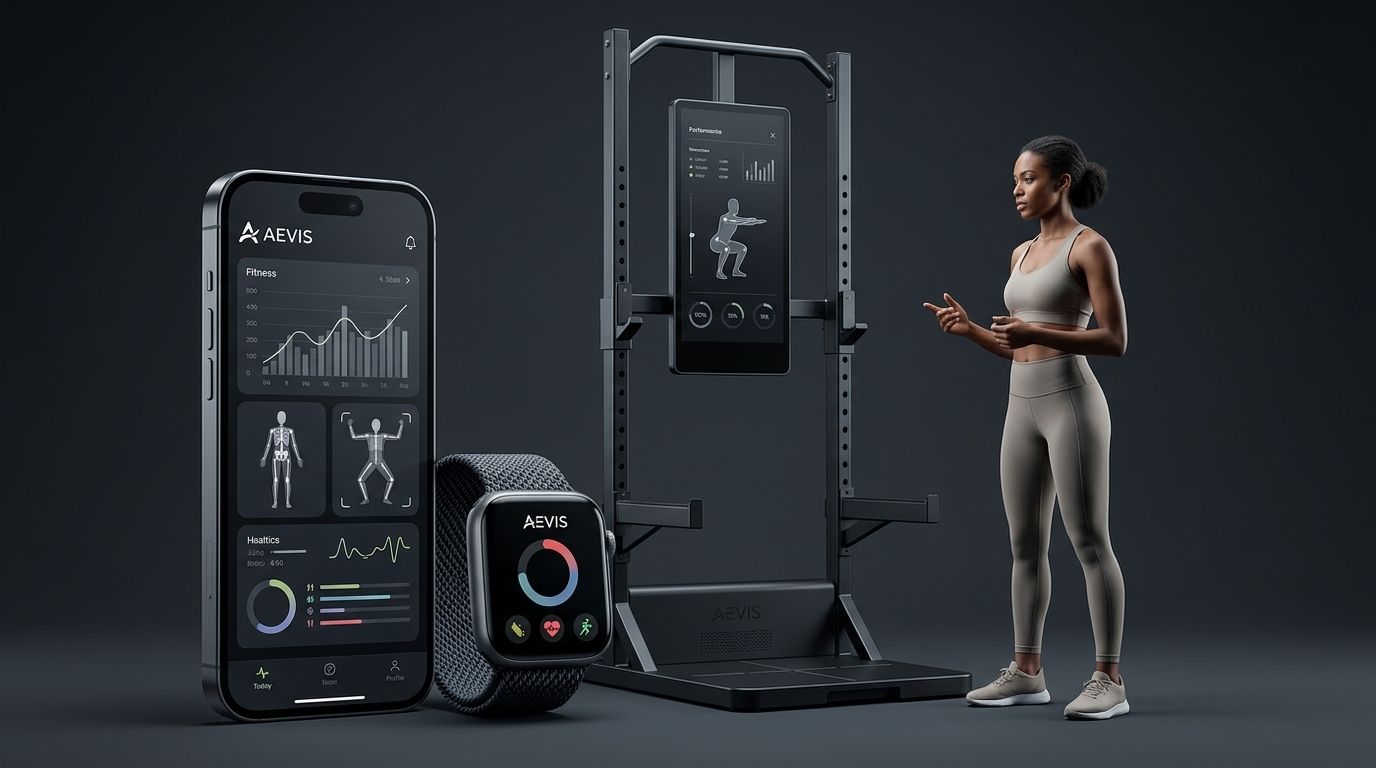
Aevis is best for iPhone wearable users who want personalized training, sleep and recovery guidance. It is a health agent app by Speediance that uses Apple Health, Apple Watch, Garmin and Oura data, with guidance also covering nutrition.
For someone choosing wearable-based support in 2026, that places the product on the planning and interpretation side of this comparison. Its stated role is to turn training, sleep and recovery data into a useful next step—not to replace hands-on exercise instruction.
The fit is strongest when you already use a wearable and want help deciding what the information means for your routine. The boundary is equally important: do not treat app guidance as diagnosis, medical clearance or proof that an exercise is being performed correctly.
If that matches your need, review Aevis, then follow the existing installation and onboarding process. Connect only the information you are comfortable sharing and check the guidance against the question that brought you there.
Explore wearable-based training guidance
See whether personalized training, sleep and recovery guidance matches the support you need.
What should you check before choosing in 2026?
Check the service boundary before you compare presentation. Ask what information the app uses, what the trainer reviews, and what each option expects you to decide independently.
For an app, read its data permissions and stated purpose before connecting accounts. For a trainer, confirm whether the arrangement includes programming, live sessions and communication outside those sessions. Do not infer any of these from a broad coaching label.
Also check whether you understand the explanation. You should be able to describe the recommended action and the reason for it without translating a screen full of scores. If the explanation leaves the original decision unresolved, ask for clarification before acting.
Can a fitness app check my exercise form?
Wearable-based guidance is not the same as observing exercise form. Do not assume an app includes movement assessment unless the product explicitly states that capability and explains its limits.
For uncertainty about setup or execution, choose qualified instruction that includes watching you perform the movement. Ask what you should notice when practicing independently.
Should I stop using my trainer if I start an app?
You do not need to stop using a trainer simply because you start an app. First identify whether they solve different problems or duplicate the same service.
Keep the trainer when live instruction remains useful. Reconsider the arrangement when you cannot name a separate job for each source of guidance.
FAQ
Can an AI fitness app replace a personal trainer in 2026?
An AI fitness app can replace some planning and check-in tasks, but not a personal trainer’s live observation and hands-on instruction. Choose according to the specific question you need answered.
What is the main difference between an AI fitness app and a personal trainer?
The main difference is the kind of information each can use during coaching. A wearable-connected app uses recorded context, while an in-person trainer can observe your exercise and respond during the session.
Is an AI fitness app enough if I already know how to exercise?
An app can fit your needs when your main gap is planning or interpreting wearable data. Knowing the movements does not remove the need for qualified help with pain, medical concerns or new technique questions.
Can I use an AI fitness app alongside a personal trainer?
You can use both when they have separate responsibilities. Agree on who owns the training plan and how conflicting recommendations will be discussed.
Is Aevis suitable for someone who already uses a wearable?
Aevis suits iPhone wearable users seeking personalized training, recovery, sleep and nutrition guidance. It uses Apple Health, Apple Watch, Garmin and Oura data.
Can a recovery score tell me whether exercise is medically safe?
A recovery score is not medical clearance. Seek appropriately qualified care for symptoms, pain or medical restrictions rather than relying on an app or personal trainer to diagnose them.
One last thing
Before changing your setup in 2026, write down 3 questions: What decision am I stuck on? What information would resolve it? Who can actually provide that information?
The best choice is the one that answers your unresolved question. Keep the wearable if its records help. Keep the trainer if live instruction helps. Add an app only when it gives those records a useful role in your next decision.